
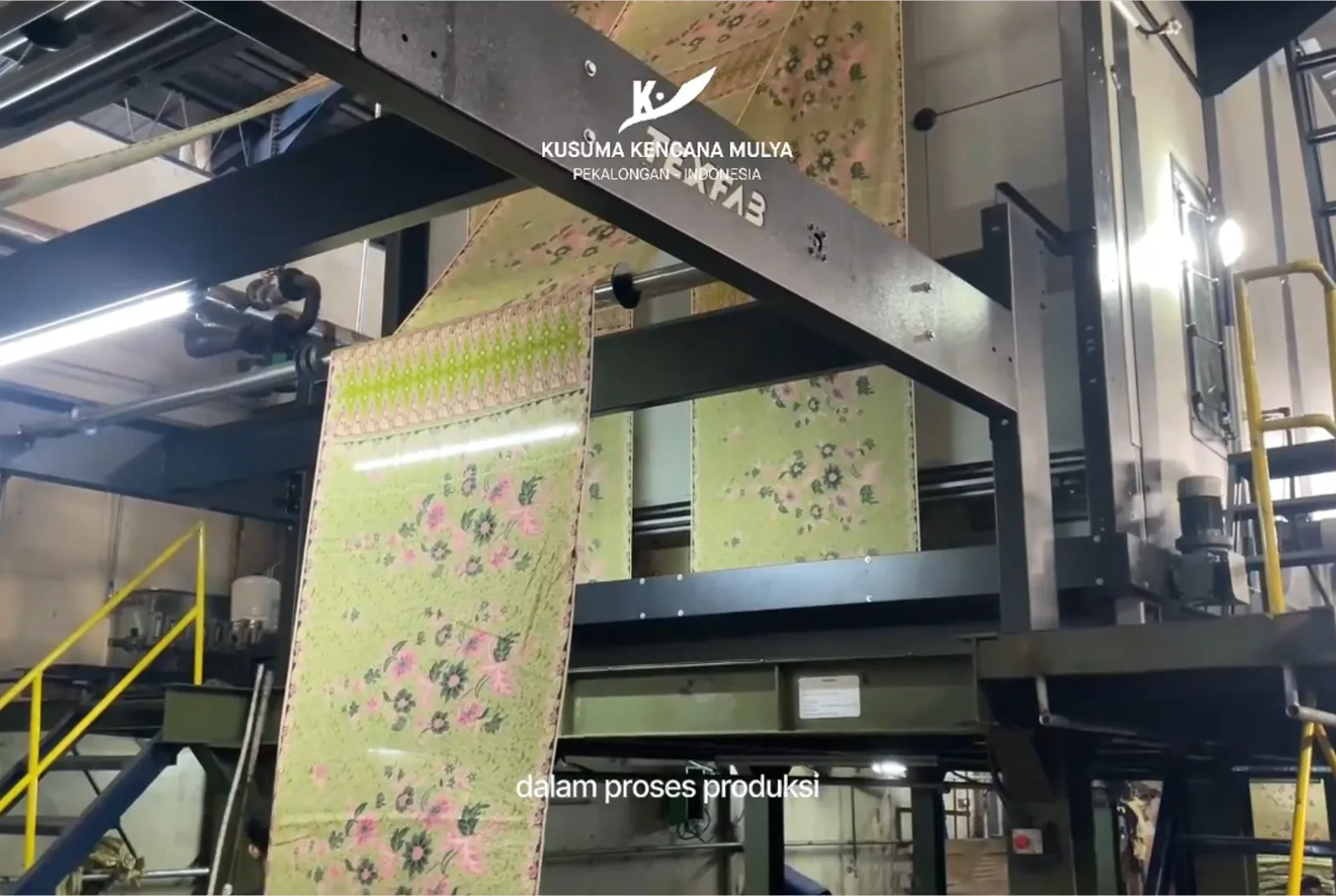
The Role of Steaming in Printed Fabric Production
Fabric coming off a printing machine already shows its pattern and colors, but printed fabric production does not always end there. For certain fabrics and dye systems, the material needs further processing, including steaming.
This process helps produce colors and patterns suited to the fabric characteristics and the type of dye used.
What Does Steaming Do in Printed Fabric Production?
Steaming exposes fabric to steam under specific conditions, such as a temperature and duration suited to the production process.
In printing systems that use certain dyes, steaming helps fix the color so the dye can bond effectively with the fabric fibers. The outcome depends on the fabric, dye, and process conditions.
Why Does Steaming Need Careful Attention?
Every fabric has different characteristics, as do dyes and their fixation requirements. Steaming conditions must therefore be adjusted to help the coloring meet the expected standards.
Factors to consider include:
- Fabric type: Fiber characteristics affect the further processing required.
- Dye type: Different dyes have different fixation mechanisms.
- Steaming temperature and duration: Process conditions should be adjusted to support optimal color results.
After steaming, fabric may still need additional steps, such as washing or drying, depending on the material and dye system.
Post-Printing Processes Shape the Finished Fabric
Printed fabric quality depends on more than the machine and printing process. Post-printing stages also help achieve optimal color and keep the pattern aligned with the design.
At PT Kusuma Kencana Mulya, each production stage is tailored to the material characteristics and process requirements to support printed fabric that meets quality standards.
Looking for a printed fabric production partner for your brand? Contact PT Kusuma Kencana Mulya to discuss your fabric design and production needs.